Key Takeaways
- Confirm sulfur purity, granule size, moisture limits, and other agreed product specifications before ordering.
- Compare supplier quotations using the same product grade, quantity, destination, and delivery terms.
- Review the Certificate of Analysis (COA) and confirm which quality documents will accompany the shipment.
- Evaluate packaging, storage conditions, loading arrangements, and transportation requirements.
- Document all product specifications and commercial responsibilities in the sales contract.
What Is Granular Sulfur?
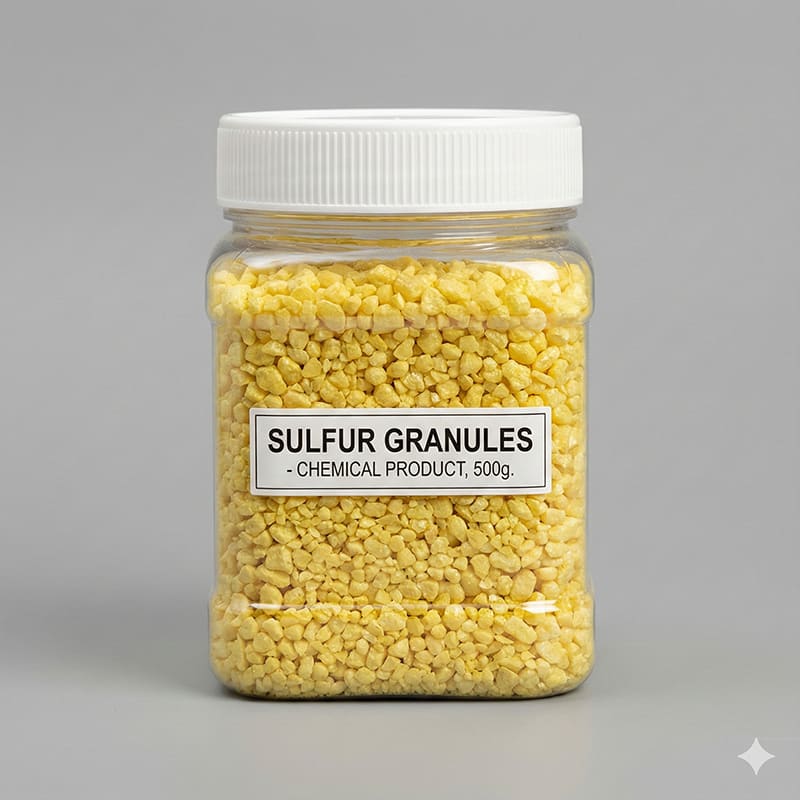
Granular sulfur is elemental sulfur formed into small, solid particles for easier handling, storage, and transportation. It is an important industrial raw material used in sulfuric acid production, phosphate fertilizer manufacturing, and other chemical and industrial processes.
Compared with irregular sulfur lumps, granular sulfur can offer more consistent particle sizing and convenient handling in suitable bulk logistics systems. Actual performance depends on granule strength, size distribution, storage conditions, and the equipment used for loading and discharge.
Before placing an order, buyers should confirm that the product form and technical grade match their intended application and receiving facilities.
How to Choose a Reliable Granular Sulfur Supplier
Selecting a granular sulfur supplier requires more than comparing the quoted price per metric ton. Buyers should evaluate the supplier's product information, documentation, commercial terms, and ability to meet the requirements of the proposed transaction.
Important factors to review include:
- Product specifications: Confirm sulfur purity, particle-size distribution, moisture limits, and other required quality parameters.
- Quality documentation: Ask for the applicable technical data sheet and Certificate of Analysis, where available.
- Order quantity: Confirm the quantity available for the proposed order and the agreed delivery schedule.
- Packaging and handling: Review bagged or bulk options according to the shipment size and destination facilities.
- Commercial terms: Clarify pricing, payment arrangements, delivery responsibilities, and any inspection requirements.
Comparing offers against the same specifications and delivery conditions helps buyers assess the total commercial value rather than relying on the initial price alone.
Understanding Granular Sulfur Specifications
Granular sulfur specifications define the quality and physical characteristics required for a particular purchase. Requirements vary according to the intended industrial process, buyer standards, and contractual agreement.
Common parameters to review include:
- Sulfur purity: The elemental sulfur content, reported according to the applicable test method and basis.
- Granule size: The particle-size range and distribution required for the buyer's handling and processing equipment.
- Moisture content: The amount of water present in the product, measured according to the agreed method.
- Ash content: The non-combustible residue remaining under the specified test conditions.
- Acidity and other impurities: Additional parameters that may be relevant to the intended application.
- Physical condition: The presence of excessive fines, broken granules, or other conditions that could affect handling.
There is no single specification that applies to every granular sulfur purchase. Buyers should obtain the supplier's actual product specification and confirm the required acceptance limits before signing the contract.
How to Verify Sulfur Quality and the COA
Quality documentation helps buyers determine whether a shipment meets the agreed product requirements. One important document is the Certificate of Analysis (COA), which reports test results for specified quality parameters.
Before confirming an order, buyers should review the available documentation and check that it corresponds to the product grade or shipment being offered. Depending on the transaction, relevant checks may include:
- Sulfur purity and the stated testing basis.
- Moisture, ash, acidity, and particle-size results where required.
- The product or batch identification and the date of testing.
- Consistency between the COA, technical data sheet, and sales contract.
- Any additional inspection or certification requirements agreed by the buyer and seller.
For larger or higher-risk transactions, the parties may agree to independent inspection of quality and quantity. The inspection company, scope, timing, and acceptance criteria should be stated in the contract rather than assumed.
Bulk Granular Sulfur: Packaging and Handling
Granular sulfur may be transported in suitable bags, large bulk bags, or bulk shipments, depending on the quantity, route, available equipment, and buyer's receiving facilities. The appropriate option should be agreed before shipment.
When comparing packaging and handling options, buyers should consider:
- Package type, capacity, and suitability for the planned shipment.
- Protection against moisture and contamination.
- Loading, unloading, conveying, and storage equipment at the destination.
- Potential generation of fines during repeated handling.
- Packaging, terminal, and handling costs included in the final delivered cost.
Granular sulfur should be stored and handled in accordance with the product's Safety Data Sheet (SDS), applicable local requirements, and site procedures. Sulfur is combustible, and fine sulfur dust can create serious fire and explosion hazards under certain conditions. Appropriate dust control, ignition-source management, ventilation, housekeeping, and storage practices are important.
Buyers should confirm that the planned transport and storage arrangements are suitable for the actual product and destination.
Understanding Granular Sulfur Shipping Terms
International sulfur transactions may use Incoterms such as FOB, CFR, and CIF. These terms help define the responsibilities of the seller and buyer for delivery, costs, and risk under the agreed rules.
- FOB (Free On Board): Under the applicable FOB rule, the seller delivers the goods on board the vessel nominated by the buyer at the named port of shipment. Risk transfers according to the rule at that delivery point.
- CFR (Cost and Freight): The seller pays the cost and freight needed to bring the goods to the named destination port, while risk generally transfers when the goods are on board the vessel at the port of shipment.
- CIF (Cost, Insurance and Freight): Similar to CFR, but the seller also arranges the insurance required under the applicable CIF rule.
These terms do not replace a complete sales contract. Buyers and sellers should specify the named port, the applicable version of Incoterms, shipment timing, payment conditions, and any agreed inspection arrangements.
Freight rates, port charges, unloading expenses, insurance, and other transaction costs should also be reviewed when comparing supplier offers.
Planning a Granular Sulfur Import or Export Order
Careful planning helps reduce avoidable delays and misunderstandings in international commodity transactions. Before requesting a firm offer, buyers should define the required grade, quantity, destination, packaging preference, and target delivery window.
Depending on the origin, destination, and transport route, the transaction may require commercial documents, transport documents, customs declarations, and other market-specific paperwork.
Before shipment, buyers should confirm:
- The product specification and order quantity.
- The destination port or delivery location.
- The agreed Incoterm and allocation of costs and responsibilities.
- The required commercial and shipping documents.
- Applicable import, customs, safety, and environmental requirements.
- Any inspection, sampling, or certification conditions included in the contract.
Import and transport requirements can differ by jurisdiction and shipment method. Buyers should verify the rules that apply to their specific transaction with the relevant authorities and qualified logistics providers.
Granular Sulfur Supply from Aban Chemical
When evaluating a granular sulfur supply proposal, buyers should focus on the match between the offered product and their technical, logistical, and commercial requirements.
For each transaction, product availability, origin, specifications, packaging options, inspection arrangements, and delivery terms should be confirmed directly with the supplier. The final offer should clearly state the product grade and the conditions that apply to the proposed shipment.
Depending on the confirmed offer, the commercial discussion may cover:
- Required sulfur grade and quantity.
- Product specifications and available quality documentation.
- Packaging, loading, and transportation arrangements.
- Destination and preferred delivery terms.
- Inspection requirements and shipment schedule.
Buyers should review the written offer and sales contract carefully before confirming an order.
How to Request a Granular Sulfur Quotation
Providing clear order details helps suppliers prepare a more relevant quotation. A request should describe the product required and the commercial conditions under which the buyer expects to receive it.
Include the following information when requesting a quotation:
- Required granular sulfur grade and specification.
- Order quantity, preferably in metric tons.
- Preferred packaging or bulk shipment method.
- Destination country and port or delivery location.
- Preferred delivery term, such as FOB, CFR, or CIF.
- Target shipment or delivery window.
- Required COA, inspection, and other quality documents.
Once a quotation is received, compare the specification, total cost, shipment conditions, and documentation against your requirements. Confirm that all agreed terms are recorded in the final commercial documents before proceeding.
To discuss a granular sulfur requirement with Aban Chemical, prepare the required grade, quantity, destination, and preferred delivery terms so that the relevant supply options can be reviewed.