Key takeaways
- Commercial sulfur is mostly recovered from natural gas and oil refining and is typically 99.5% to 99.9% pure.
- Formed sulfur, such as granules, produces far less dust than crushed lump sulfur, which makes handling safer and cleaner.
- Ash, acidity, carbon and moisture are the key specification points, together with granule size.
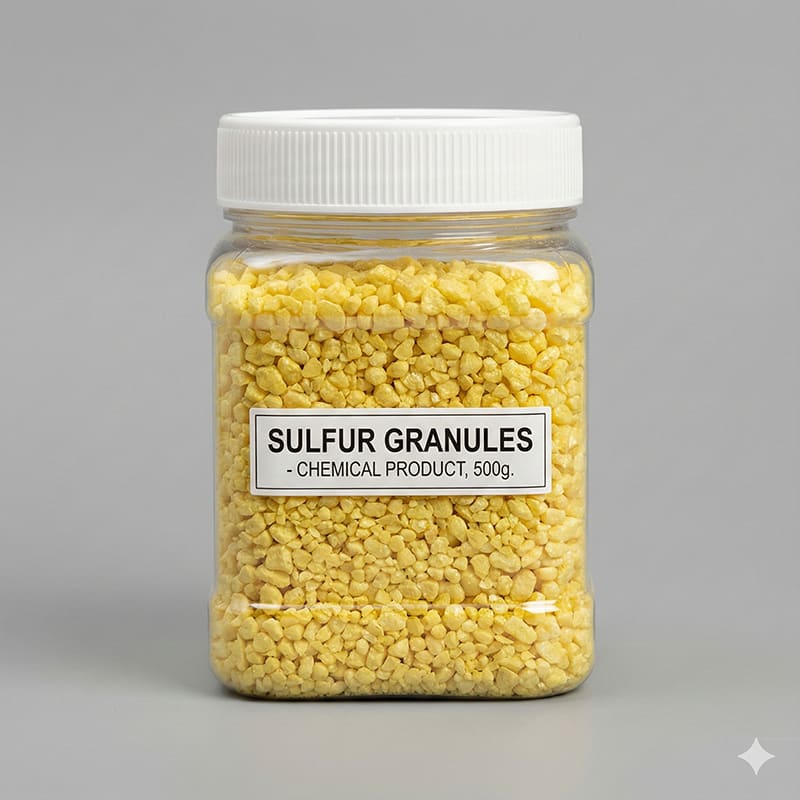
Elemental sulfur is a bright yellow solid and one of the largest-volume commodities in the chemical industry. The vast majority is used to make sulfuric acid, which in turn is essential for phosphate fertilizers, metal leaching and many chemical processes. For buyers, the questions are simple: how pure is it, what physical form is it in, and how will it arrive?
Where sulfur comes from
Most sulfur today is not mined. It is recovered when sulfur compounds are removed from natural gas and crude oil, usually in Claus units at gas processing plants and refineries. The recovered liquid sulfur is then either shipped molten or solidified into a formed product for easier storage and transport.
Forms of solid sulfur
| Form | Description | Handling |
|---|---|---|
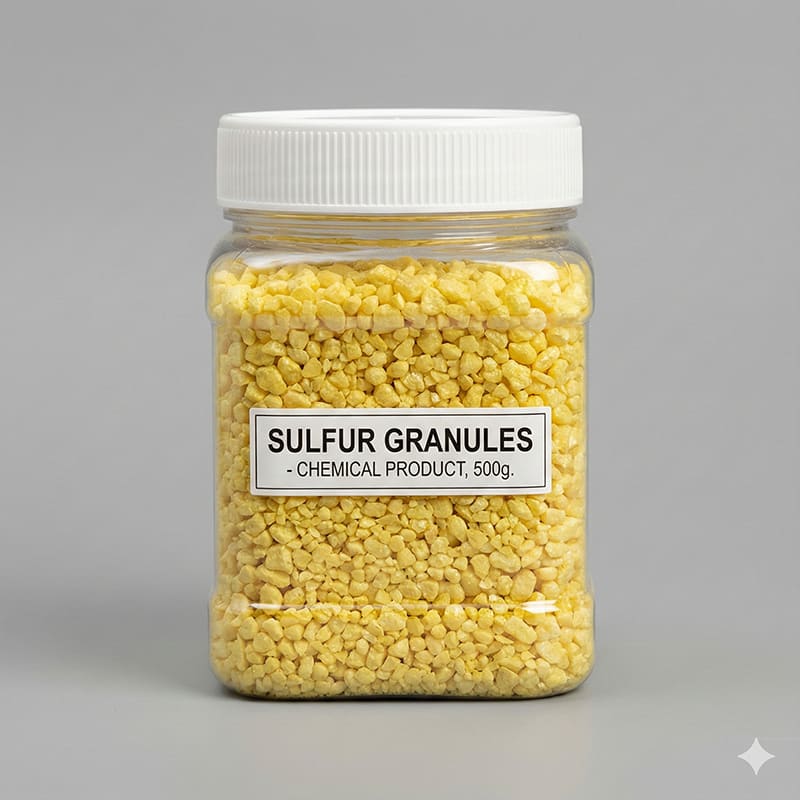
| Granular | Round granules, typically 2 to 6 mm | Low dust, free-flowing, preferred for trade |
| Prilled / pastilles | Small rounded or hemispherical particles | Low dust, used for smaller volumes |
| Lump | Crushed from large solid blocks | Dusty, higher fire and explosion risk |
| Flakes | Thin flakes from cooling belts | More fragile, more fines |
| Liquid (molten) | Kept at about 135 to 145 °C | Needs heated tanks and special vessels |
Typical granular sulfur specification
| Parameter | Typical limit |
|---|---|
| Purity (S) | min 99.5%, often 99.9% |
| Ash | max 0.05% |
| Acidity (as H2SO4) | max 0.02% |
| Carbon / organic matter | max 0.1% |
| Moisture | max 0.5% |
| Arsenic, selenium, tellurium | Trace, often specified in mg/kg |
| Granule size | 2 to 6 mm, minimal fines |
Sulfuric acid producers watch ash and carbon closely because they affect burner operation and acid quality. Fertilizer and agricultural users often care more about granule size and dust.
Main uses of sulfur
- Sulfuric acid production, by far the largest use, mainly for phosphate fertilizers.
- Metal leaching, for example in copper and nickel processing, through sulfuric acid.
- Fertilizers and soil amendment, including sulfur-bentonite and sulfur-enhanced products.
- Rubber vulcanization, chemicals, pharmaceuticals and fungicides.
Shipping and storage
Granular sulfur is shipped in bulk carriers or packed in jumbo bags. Bulk sulfur is carried under the IMSBC Code, which sets requirements for hold preparation, ventilation, sources of ignition and protection against dust.
Why moisture and cleanliness matter
Wet sulfur in contact with steel slowly forms acidic conditions that corrode cargo holds. Ship owners therefore often require holds to be lime-washed before loading. Contracts should state who arranges and pays for hold preparation.
Dust and fire
Sulfur dust can form explosive mixtures with air and sulfur burns to produce toxic sulfur dioxide. Formed granules dramatically reduce dust compared with lumps, but conveyors, loaders and storage sheds still need dust control, anti-static measures and fire-fighting readiness.
Inspection checklist for buyers
- Confirm the specification and granule size range in the contract.
- Appoint an independent inspector for sampling during loading and quality analysis.
- Request a draft survey for quantity, plus hold cleanliness and condition reports.
- Check that the Certificate of Origin, Bill of Lading and Safety Data Sheet match the cargo.
Sulfur from Aban Chemical
Aban Chemical supplies granular sulfur for sulfuric acid, fertilizer and industrial buyers, with independent inspection and full shipping documentation. See our sulfur product page or request a quote.