Key Takeaways
- Define the required LPG grade, propane-to-butane composition, quantity, and destination before contacting a supplier.
- Compare supplier offers using the same product specification, pricing basis, shipment period, and delivery terms.
- Review the Certificate of Analysis (COA), Safety Data Sheet (SDS), and agreed independent inspection arrangements.
- Confirm that the shipment method, receiving terminal, storage facilities, and handling equipment are suitable for LPG.
- Make sure the quotation and sales contract clearly state product quality, quantity, price, delivery responsibilities, and documentation.
What Should Buyers Define Before Contacting an LPG Supplier?
A successful bulk LPG purchase begins with a clear description of the buyer's requirements. An LPG supplier cannot prepare a meaningful quotation unless the product type, required composition, quantity, destination, and delivery conditions are understood.
Before requesting an offer, buyers should prepare the following information:
- Product grade: Specify whether the requirement is commercial propane, commercial butane, or a propane-butane mixture.
- Composition: State the required propane and butane percentages and any limits for other components or impurities.
- Quantity: Provide the expected order volume and clarify the measurement basis, such as metric tons or another agreed unit.
- Destination: Identify the destination port, terminal, or delivery location.
- Supply format: Indicate whether bulk, containerized, or packed supply is preferred.
- Delivery schedule: Provide the target shipment period and whether the order is one-time or recurring.
- Commercial terms: State the preferred delivery term, payment expectations, and any inspection requirements.
Preparing this information in advance reduces unnecessary clarification and helps suppliers submit offers that can be compared on an equivalent basis.
How to Evaluate a Bulk LPG Supplier
Choosing a bulk LPG supplier requires more than selecting the lowest price. Buyers should assess the supplier's business information, product documentation, proposed logistics, and ability to meet the specifications and commercial conditions of the order.
Useful checks include:
- Business identity: Confirm the legal name, contact details, and contractual identity of the company making the offer.
- Product information: Request a clear specification identifying the LPG grade, composition, and applicable quality requirements.
- Shipment details: Check the proposed quantity, loading location, shipment period, destination, and delivery method.
- Quality verification: Confirm what COA and inspection documents will be provided and whether independent inspection is available.
- Logistics arrangements: Review the proposed vessel, container, terminal, or other transport arrangement and confirm compatibility with the destination facilities.
- Commercial transparency: Make sure the quotation identifies the pricing basis, delivery term, payment conditions, and costs included or excluded.
A professional offer should provide enough information for the buyer to evaluate the product and transaction without relying on vague statements or unsupported promises. Important details should be confirmed in writing before payment or shipment.
Bulk LPG Supply Options and Delivery Formats
LPG can be supplied through different delivery formats. The appropriate option depends on the order quantity, transport route, product requirements, and receiving facilities.
- Bulk supply: Suitable for larger requirements handled through dedicated storage and transfer facilities. Buyers should confirm vessel or tanker arrangements, terminal compatibility, and the agreed quantity measurement procedure.
- Containerized supply: May be appropriate for certain routes and shipment sizes using equipment designed and approved for LPG service. Container type, capacity, handling requirements, and transport regulations should be confirmed in advance.
- Packed supply: May suit buyers whose distribution or receiving arrangements require packaged product rather than direct bulk delivery. The exact package type, filling arrangement, and applicable safety requirements should be specified in the offer.
These formats are not interchangeable in every transaction. Buyers should select the method that matches their infrastructure, required volume, destination regulations, and unloading capabilities.
How to Verify LPG Quality, COA, and Inspection
Quality verification is an essential part of bulk LPG procurement. The Certificate of Analysis (COA) provides test results for specified product-quality parameters and allows buyers to compare the offered or supplied product with the agreed specification.
Depending on the LPG grade and intended application, buyers may need to review:
- Propane, butane, and other hydrocarbon composition.
- Vapor pressure measured at the specified reference temperature.
- Total sulfur and hydrogen sulfide, where applicable.
- Water or moisture content and relevant residue limits.
- Relative density and other physical properties required by the product specification.
- Corrosion-related test results, where required by the applicable grade or standard.
The COA should be checked against the product specification and the quality requirements written into the sales contract. Buyers should also confirm the product or batch identification, testing basis, and document date.
Independent inspection can provide additional verification of quantity and quality at the agreed inspection point. Before shipment, the buyer and seller should define the inspection company, sampling procedure, measurement method, timing, and acceptance criteria.
The COA and Safety Data Sheet (SDS) are different documents. The COA reports analytical quality results, while the SDS describes product hazards, protective measures, handling, storage, and emergency information. Both should be reviewed as applicable to the actual product.
Understanding LPG Pricing and Supplier Quotations
Comparing LPG quotations requires attention to more than the price per metric ton. LPG transactions may be priced against regional market references or agreed commercial formulas, and the applicable basis can vary by product, origin, destination, and transaction period.
When reviewing an LPG quotation, buyers should clarify:
- Pricing reference: Identify the market benchmark or pricing formula, if one is used.
- Pricing period: Confirm the relevant month, publication date, or quotation validity period.
- Premium or discount: Check whether an additional amount is applied to the reference price.
- Price unit and currency: Confirm whether the offer is stated per metric ton or another unit and identify the currency.
- Freight and insurance: Identify which transportation and insurance costs are included in the quoted price.
- Additional charges: Check terminal, handling, inspection, customs, and other relevant expenses.
- Quantity and tolerance: Confirm the contract quantity, permitted variation, and measurement basis.
A lower initial quotation does not always represent the lowest delivered cost. Buyers should compare the full cost of receiving the product at the agreed destination and make sure that all offers use equivalent specifications and delivery conditions.
For further background on LPG composition, market references, and transport options, see our LPG specifications guide.
LPG Shipping Terms and Delivery Responsibilities
The delivery term in an LPG contract determines how the seller and buyer divide specific delivery responsibilities, costs, and risks. For seaborne LPG cargoes, commonly used terms include FOB, CFR, and CIF under the applicable Incoterms rules.
- FOB (Free On Board): The seller delivers the goods on board the vessel nominated by the buyer at the named port of shipment. Risk transfers when the goods are on board the vessel.
- CFR (Cost and Freight): The seller pays the cost and freight required to bring the goods to the named destination port. However, risk generally transfers when the goods are on board the vessel at the port of shipment. The seller is not required to arrange insurance under CFR.
- CIF (Cost, Insurance and Freight): The seller pays the cost and freight to the named destination port and also arranges the insurance required under the CIF rule. Risk nevertheless transfers when the goods are on board the vessel at the port of shipment.
FOB, CFR, and CIF are intended for sea and inland-waterway transport. If LPG is supplied through containerized or multimodal transport, another Incoterms rule may be more appropriate. The parties should identify the correct rule, named port or place, and applicable Incoterms version in the contract.
For LPG shipments, the delivery agreement should also address vessel or container suitability, loading and unloading arrangements, terminal requirements, quantity measurement, inspection, and required shipping documents.
Safe Storage, Handling, and Receiving Facilities
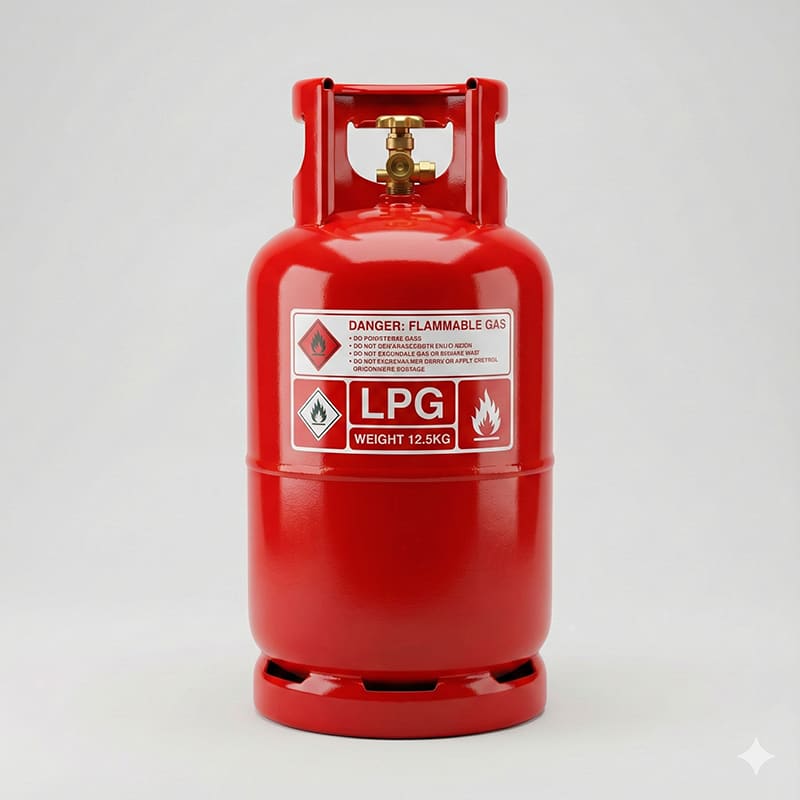
LPG is a highly flammable product that is normally stored and transported as a liquid under pressure or under suitably controlled refrigerated conditions. Its safe receipt and storage require facilities designed for the specific product and operating conditions.
Before confirming a delivery, buyers should ensure that:
- The receiving tanks, vessels, containers, valves, and transfer systems are suitable for LPG service.
- The terminal or facility has the required approvals and inspection arrangements.
- Gas detection, fire protection, pressure-relief, and emergency response systems are appropriate for the installation.
- Loading, unloading, and transfer activities are handled by trained personnel under approved procedures.
- The receiving site follows the applicable safety, environmental, and hazardous-material regulations.
LPG vapor is heavier than air and can accumulate in low-lying or poorly ventilated areas, creating fire, explosion, and asphyxiation hazards. Buyers should review the product's SDS and confirm that their facilities and operating procedures are suitable before accepting a shipment.
Documents to Confirm Before an LPG Shipment
Clear documentation helps reduce disputes and supports customs clearance, cargo verification, and safe handling. The exact documents required depend on the product, origin, destination, transport mode, and contractual arrangements.
Depending on the transaction, the document package may include:
- Commercial invoice and sales contract.
- Certificate of Analysis (COA).
- Safety Data Sheet (SDS).
- Bill of lading or applicable transport document.
- Certificate of origin, where required.
- Independent inspection or quantity certificate, if agreed.
- Customs and regulatory documents required by the destination market.
Buyers should confirm document names, issuing parties, required formats, and delivery deadlines before the shipment is dispatched. They should also ensure that product descriptions and quantities are consistent across the relevant documents.
LPG Supply from Aban Chemical
Aban Chemical's LPG product page describes supply options for bulk, container, and packed orders under FOB, CFR, or CIF terms. It also states that a Certificate of Analysis (COA), independent inspection, shipping documentation, and logistics coordination are available for shipments.
Buyers considering an LPG purchase can review the Aban Chemical LPG product page for product information and available supply arrangements.
To prepare a relevant offer, the buyer should provide the required LPG grade, propane-butane composition, order quantity, destination port, preferred delivery format, and target shipment period. Any specific quality, inspection, or documentation requirements should also be stated in the inquiry.
All product availability, specifications, shipment details, and commercial conditions should be confirmed in the written quotation for the particular transaction.
How to Request an LPG Quotation
A complete request for quotation helps the supplier evaluate the order and respond with relevant commercial terms. To reduce follow-up questions, buyers should include:
- Required LPG grade and propane-butane composition.
- Order quantity and preferred measurement unit.
- Preferred supply format: bulk, containerized, or packed.
- Destination port or delivery location.
- Preferred delivery term, such as FOB, CFR, or CIF for eligible sea shipments.
- Target shipment period and whether the requirement is recurring.
- Required COA, SDS, independent inspection, and other documents.
- Any terminal, storage, or receiving-facility requirements.
After receiving an offer, compare the product specification, pricing basis, total delivered cost, shipment arrangements, inspection conditions, and documentation. Before proceeding, make sure the agreed terms are clearly recorded in the sales contract.
For an LPG inquiry, submit a request for quotation to Aban Chemical with your product, quantity, packaging preference, destination port, and preferred delivery terms.